Best Combination Whetstone for Sharp, Reliable Knives
Compare the best combination whetstones by grit range, durability, and value—dual-grit 1000/6000 water stones and oil stones for keeping kitchen knives sharp.

Editorial Review
Independent, research-driven reviews by our editorial team
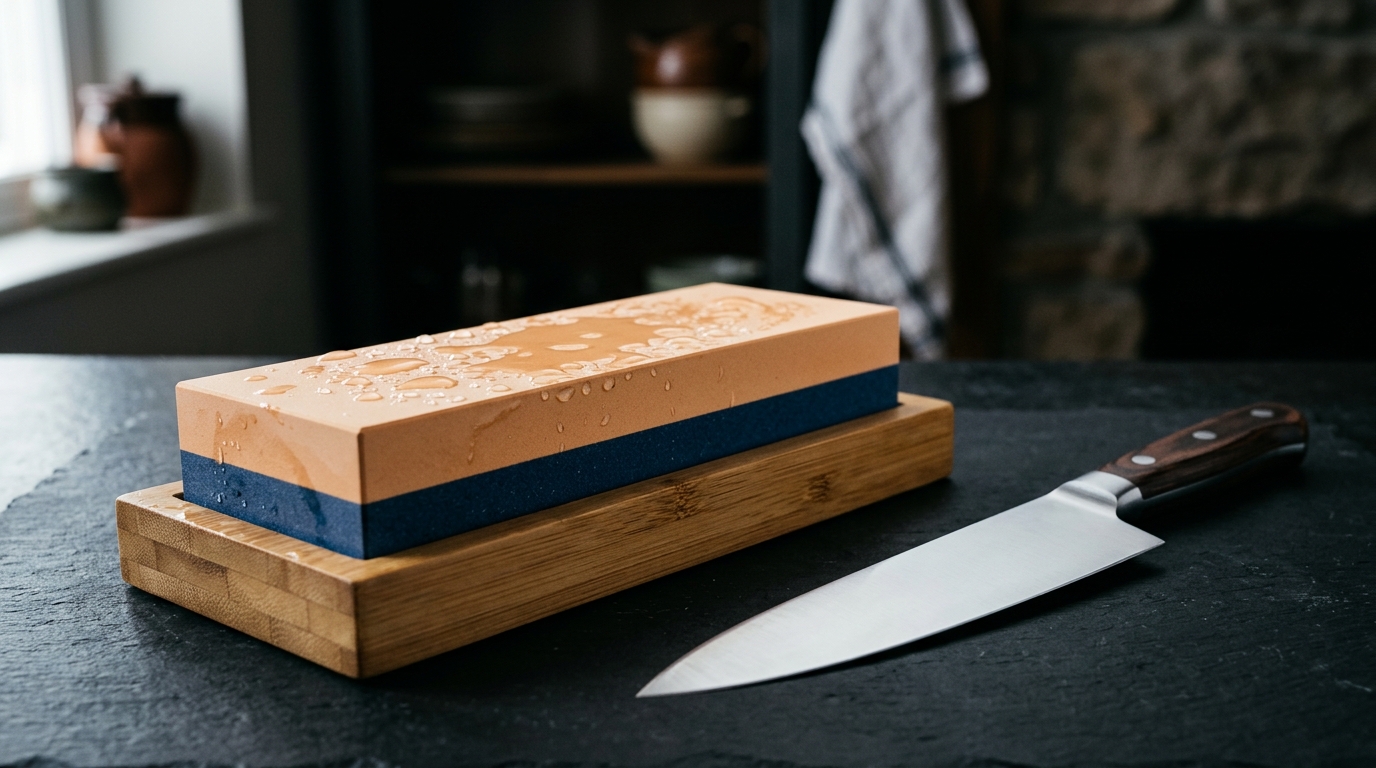
Table of Contents
Affiliate Disclosure: We may earn a commission if you purchase through our links. This doesn't affect our reviews.
Why a combination whetstone belongs in every kitchen
A dull knife is more dangerous than a sharp one because it forces you to press harder, and pressing harder is how fingers get cut. The fastest, gentlest way to bring a tired edge back to life is a combination whetstone—a single block that bonds two grits onto opposite faces, usually a medium side around 1000 grit for shaping and a fine side around 6000 grit for polishing. One stone, two jobs, no drawer full of loose plates.
The word whet simply means "to sharpen," so a whetstone is not automatically a water stone. Whetstones come in three families: water stones (lubricated with water), oil stones (lubricated with honing oil), and diamond plates (used dry or with a splash of water). Combination versions exist in all three, and the best choice depends on how often you sharpen, what you sharpen, and how much maintenance you're willing to do.
Most home cooks only need two grits: a medium grit in the 800–1200 range to reset a working bevel, and a fine grit in the 3000–6000 range to polish that bevel until the blade glides through tomato skin and paper. A combination stone delivers exactly that, which is why we recommend one as a starting point in our broader best knife sharpener guide. Below are the combination whetstones we recommend, followed by a buying guide that explains grit, lubricant type, and the accessories that separate a great stone from a frustrating one.
Our combination whetstone picks at a glance
- Best overall: Sharpal 12-inch Dual-Grit 1000/6000
- Best budget: King KW65 1000/6000 Combination Stone
- Best oil stone: Norton India Combination IB8
- Best premium / diamond: DMT DuoSharp dual-sided plate
- Best for a full grit progression: Whetstone Cutlery two-stone set
Best overall: Sharpal 12-inch Dual-Grit 1000/6000
Sharpal Dual-Grit 1000/6000 Sharpening Stone Kit
The Sharpal dual-grit stone is the combination whetstone we recommend to most home cooks because it bundles everything a beginner needs in one box: a 1000/6000 aluminum-oxide water stone, a non-slip bamboo and silicone base, a pair of angle guides, and—crucially—a flattening stone for truing the surface. The 1000-grit side cuts at a respectable speed and leaves an edge ready for the 6000-grit side, which polishes to a clean, push-cutting finish.
The included accessories are the real value. Angle guides clip onto the spine and help a new sharpener hold a consistent 15–20 degree bevel, and the flattening stone means you can keep the surface true without buying a separate nagura or diamond plate. At roughly 12 by 4 inches, the face is large enough to swing an 8- or 10-inch chef's knife without feeling cramped.
Pros: Complete kit, large sharpening face, fast-cutting 1000 side, good polish off the 6000 side. Cons: The stone dishes faster than premium resin-bonded options and requires regular flattening. Who it's for: First-time sharpeners and anyone who wants one box with no extra purchases.
Best budget: King KW65 1000/6000 Combination Stone
King KW65 1000/6000 Combination Whetstone
King's combination water stone is the classic Japanese budget pick and the stone many sharpeners learn on. The 1000-grit side cuts a touch slower than the Sharpal but leaves a clean, consistent scratch pattern, and the 6000 side polishes beautifully for the price. It is a no-frills stone—no base, no angle guide, no flattening stone in the box—so you are paying for the abrasive, not the packaging.
The King dishes faster than the Sharpal and should be soaked for about ten minutes before use, because it is a traditional clay-bonded water stone rather than a splash-and-go resin stone. If you already own a holder or are willing to rest the stone on a damp towel, and you don't mind flattening with silicon-carbide powder on a piece of glass, it is hard to beat for the money.
Pros: Excellent polish for the price, clean scratch pattern, genuine Japanese water stone. Cons: No accessories included, needs soaking, dishes quickly. Who it's for: Budget shoppers who already have or will improvise a holder.
Best oil stone: Norton India Combination IB8
Norton India Combination Oilstone IB8
Not every stone needs water. Norton's India combination oilstone bonds a coarse silicon-carbide side with a fine aluminum-oxide side and is lubricated with honing oil instead of water. Oil stones cut more slowly than water stones but wear far more slowly—they rarely need flattening and will outlast most water stones by years under heavy use.
The IB8 is 8 inches long (a 6-inch IB6 version also exists) and excels on harder or abused blades: thick German kitchen knives, outdoor and camp knives, scissors, and even chisels. The finish off the fine side is functional rather than mirror-bright, which is perfectly adequate for a working edge. Because it uses oil, there is no soaking and no risk of the stone cracking if it freezes in a cold garage.
Pros: Extremely durable, almost no flattening needed, great on tough blades, no soaking. Cons: Slower cutting, oil is messy, the finish is not a mirror polish. Who it's for: Outdoor cooks, tool sharpeners, and anyone who dislikes the mess of soaking water stones.
Best premium / diamond: DMT DuoSharp dual-sided plate
DMT DuoSharp Dual-Sided Diamond Sharpening Stone
Diamond plates sharpen by removing steel with embedded industrial diamonds, so they cut fast, never dish, and double as a flattening stone for your water stones. DMT's DuoSharp is the benchmark for the category: a precision-flat aluminum plate with monocrystalline diamond bonded to two faces. A coarse/fine pairing or a fine/extra-fine pairing covers most kitchen needs, though even the finest DMT grit tops out well below the mirror polish a 6000 water stone produces.
The DuoSharp is the most expensive option here and genuine overkill if you only touch up a few kitchen knives a year. But if you sharpen often, maintain a wide range of tools, or want a single plate that also trues your water stones, it earns its keep and never needs replacing.
Pros: Perfectly flat, cuts fast, never dishes, doubles as a flattening stone, lasts a lifetime. Cons: Expensive, coarser maximum finish than a fine water stone. Who it's for: Frequent sharpeners and enthusiasts who want flat, fast, low-maintenance sharpening.
Best for a full grit progression: Whetstone Cutlery two-stone set
Whetstone Cutlery Two-Stone Set 400/1000 and 3000/8000
A single combination stone covers most kitchen edges, but if you regularly repair chipped blades or chase a mirror finish, you will want a wider grit range. This two-stone set delivers four grits: 400 for repairing nicks and reshaping a damaged edge, 1000 for shaping the bevel, 3000 for refining, and 8000 for a mirror polish. Bundled with a bamboo base and angle guides, it is the most complete kit here for the money.
The trade-off is quality rather than range. The stones are softer and dish faster than the Sharpal or King, and the 8000 side works best with a nagura slurry stone to build a polishing paste. Think of it as an affordable way to learn a full progression before investing in premium single-grit stones down the road.
Pros: Four grits from repair to mirror, includes base and guides, great value for the range. Cons: Softer stones that dish quickly, finest side benefits from a nagura stone. Who it's for: Enthusiasts learning repair and polish work on a budget.
How to choose a combination whetstone
Grit range
Grit numbers describe abrasive particle size—lower is coarser. For kitchen knives, a 1000/6000 combination is the sweet spot: 1000 resets a dull edge, 6000 polishes it. If your knives see hard use or have small chips, look for a set that adds a 400–600 repair grit. An 8000 grit is a nice-to-have for mirror finishes but is not essential for actual cooking, and anything above 8000 is really the domain of straight razors and sushi knives.
Water stone, oil stone, or diamond
Japanese water stones cut the fastest and produce the finest polish, but they dish and need flattening. Oil stones like the Norton India cut more slowly and wear almost nothing, making them ideal for tools and outdoor gear. Diamond plates cut fast, stay perfectly flat, and double as flattening tools, but their coarsest finish is rougher than a fine water stone. Most home cooks are happiest starting with a water stone; our kitchen knife sharpening guide walks through the full process.
Size and thickness
A longer stone—8 to 12 inches—lets you sweep a chef's knife across the surface in long, steady strokes instead of short, choppy ones. Thickness matters for longevity: a thicker stone survives more flattenings before it becomes too thin to use. Avoid the very thin, cheap stones sold purely as novelty items; they crack and dish quickly.
Accessories that actually matter
- Flattening (truing) stone: Essential for water stones, which dish in the middle. Every stone in this list either includes one or works with one.
- Angle guide: A small clip that holds the blade at a consistent bevel angle. Invaluable for beginners.
- Non-slip base: A sharpening stone skidding mid-stroke is dangerous. A bamboo holder or silicone mat is worth having.
- Nagura stone: A small dressing stone used to raise a slurry on fine grits for a smoother polish.
Splash-and-go versus soak
Newer resin-bonded "splash-and-go" stones need only a quick spritz of water before use. Traditional clay-bonded stones (like the King) need a 10–15 minute soak. Splash-and-go stones cost more but are far more convenient and less prone to cracking if you forget to dry them.
How to use a combination whetstone, briefly
- Prepare the stone. Soak a traditional water stone until bubbles stop, or splash a splash-and-go or oil stone with the correct lubricant.
- Start on the 1000 side. With the blade at a consistent 15–20 degree angle, sweep the edge across the stone in even strokes, working one side then the other until you feel a faint burr along the entire edge.
- Move to the 6000 side. Repeat with lighter pressure to polish away the 1000-grit scratches and refine the burr.
- Remove the burr. A few feather-light strokes on each side, or a leather strop, clear the burr and leave a keen edge.
For the full walkthrough—including how to handle thin, hard Japanese blades—see our guide on how to sharpen a Japanese knife. And do not confuse sharpening with honing: a honing rod realigns an edge between sharpenings but removes almost no steel. Our knife steel guide explains exactly when to hone and when to reach for the stone.
Maintenance: keep your stone flat
Water stones wear concave in the middle as you sharpen, and a dished stone rounds your edges instead of sharpening them. Flatten the surface regularly by rubbing it against a flattening stone or silicon-carbide powder on a known-flat surface (a piece of glass works well) until the face is uniform again. Store stones dry and away from freezing temperatures, since soaked water stones can crack if they freeze.
Oil and diamond stones need almost no maintenance—just wipe them clean and keep them dry. A diamond plate's abrasive will eventually wear down after years of use, but it will never dish, which is why many sharpeners keep one around primarily to true their water stones.
The bottom line
For most home cooks, the Sharpal 1000/6000 is the combination whetstone to buy first: it is a complete, well-priced kit that produces genuinely sharp edges out of the box. Buy the King KW65 if you want the cheapest path to a fine Japanese polish, the Norton India if you sharpen tools and outdoor blades as often as kitchen knives, and the DMT DuoSharp if you want one flat, fast, lifetime plate that also keeps your other stones true.
Whatever you choose, pair it with good technique and a quality knife worth sharpening. A well-maintained edge on an affordable chef's knife will outperform a neglected expensive one every time, so if you are also shopping for a blade, our roundup of the best chef knives under $200 and our advice on the best cutting boards for Japanese knives will help you protect that fresh edge from the moment you put it on.
Nora Whitfield
Writer, Kitchenware Authority
Nora Whitfield writes Kitchenware Authority's reviews and buying guides. Every knife, pan, and appliance is vetted against maker specifications, materials and safety documentation, and the long-run experience verified home cooks report — not first-hand lab tests.
Upgrade Your Kitchen Skills
Get chef-curated gear reviews, maintenance tips, and exclusive buying guides delivered to your inbox.
Join 15,000+ home cooks. No spam, ever.