Tojiro vs Shun: Value Japanese Knife or Premium Upgrade?
Tojiro vs Shun compared by steel, fit and finish, care, value, and who should buy each Japanese knife brand.

toc Table of Contents
Affiliate Disclosure: We may earn a commission if you purchase through our links. This doesn't affect our reviews.
Tojiro and Shun both make real Japanese kitchen knives, but they answer different buying questions. Tojiro is the value pick if you want the sharpest practical path into Japanese steel. Shun is the premium pick if you want better finishing, broader U.S. availability, and a knife that feels gift-ready out of the box.
The cleanest comparison is the Tojiro Classic F-808 210mm gyuto against the Shun Classic 8-inch chef's knife. Both are stainless-clad, double-bevel, Japan-made all-purpose knives. The difference is where the money goes.
Quick Verdict
Buy Tojiro if value matters most. Tojiro's Classic F-808 uses a VG-10 core, 13-chrome stainless outer layers, a reinforced laminated full-tang handle, and a 210mm blade. It is the better way to learn whether Japanese knife geometry suits your kitchen before spending premium money.
Buy Shun if you want the safer premium purchase. Shun Classic uses VG-MAX, 68 total layers of stainless Damascus cladding, a 16-degree edge on each side, and an ebony Pakkawood handle. It looks and feels more finished, and Shun's U.S. service network is a real advantage for gift buyers.
If you are still choosing across brands, start with our best Japanese knives for home cooks. If the budget ceiling is firm, use our best Japanese knives under $100.
Tojiro vs Shun At A Glance
| Tojiro Classic / DP | Shun Classic | |
|---|---|---|
| Best for | Value, first gyuto, sharpening practice | Premium first knife, gifts, polished fit and finish |
| Representative chef knife | F-808 Chef Knife 210mm | Classic 8-inch Chef's Knife |
| Core steel | VG-10 | VG-MAX |
| Cladding | 13-chrome stainless outer layers | 68 total layers of stainless Damascus cladding |
| Edge | Double bevel | 16 degrees each side |
| Handle | Reinforced laminated, 3-stud, full tang | Ebony-finished Pakkawood, full composite tang |
| Published weight | 200 g for F-808 | 190 g / 6.7 oz for Classic 8-inch |
| Best read | Maximum performance per dollar | Better finish, presentation, and support |
Steel And Edge Feel
Tojiro's main value knife uses VG-10, one of the safest Japanese stainless choices for home cooks. On the official F-808 page, Tojiro lists a VG-10 core, VG10 clad blade, 13-chrome stainless outer layers, and double-bevel edging. That combination keeps maintenance manageable while still giving you the thin, crisp feel people expect from a Japanese gyuto.
Shun Classic uses VG-MAX, Shun's proprietary VG-family stainless steel. Shun lists the Classic 8-inch chef's knife with a VG-MAX cutting core, a 16-degree edge on each side, and stainless Damascus cladding. The practical difference is not that VG-MAX makes Shun magically sharper. It is the whole package: steel, grind, handle, finish, warranty support, and a more premium retail experience.
For a deeper steel explanation, see our Japanese knife steel guide. The short version: both brands sit in the practical stainless-Japanese lane, not the high-maintenance carbon-steel lane.
Head-To-Head: Chef Knives
Tojiro DP 210mm Gyuto
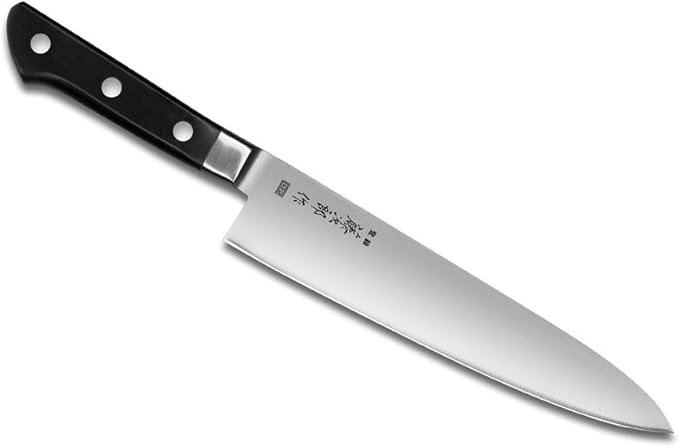
Tojiro DP 8" Gyuto
Tojiro
The best entry-level Japanese knife with VG10 core steel. Exceptional sharpness at an unbeatable price.
Check current Tojiro DP 210mm Gyuto availability
The Tojiro DP / Classic gyuto is the one to buy if you care about cutting performance more than polish. The blade is long enough for onions, herbs, boneless proteins, and larger vegetables, and the Western handle makes the transition easier if you are coming from Victorinox, Wusthof, or Zwilling.
The tradeoff is finishing. Expect a plainer handle, simpler presentation, and less refinement around the spine and choil than you get from Shun. For many cooks, that is the point: spend less on ornament and more on learning good knife habits.
Shun Classic 8-Inch Chef's Knife
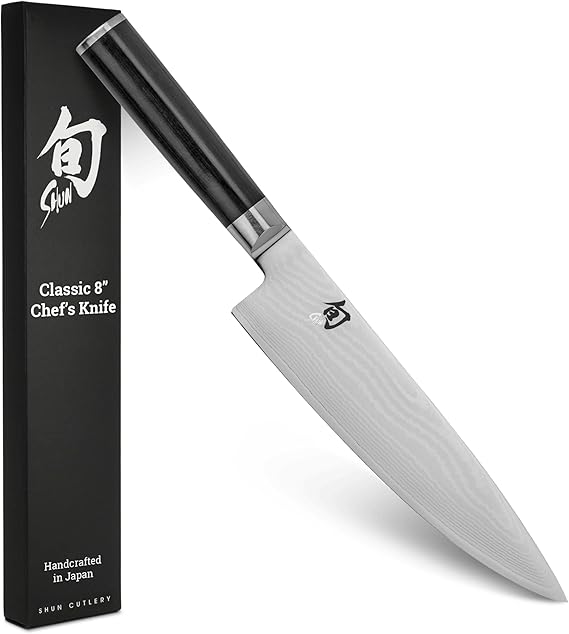
Shun Classic 8" Chef's Knife
Shun
A handcrafted Japanese chef's knife featuring 68 layers of Damascus cladding and a VG-MAX cutting core.
Check current Shun Classic 8-inch availability
The Shun Classic is the better premium first Japanese knife. It has the visual drama people expect from Damascus cladding, a refined Pakkawood handle, and a familiar chef-knife profile with enough curve for cooks who still rock through herbs.
Buy it when the experience matters: gifting, presentation, service access, and a knife that feels complete immediately. Skip it if you mainly want maximum value and do not mind a simpler finish.
Santoku Comparison
The same pattern holds in santoku knives. Tojiro's F-503 Santoku 170mm uses the same practical VG-10 clad construction as the gyuto, with a shorter, flatter blade for vegetables and compact boards. Shun's Classic 7-inch Hollow Ground Santoku uses VG-MAX, 68 total Damascus cladding layers, a 16-degree edge each side, and hollow-ground indentations intended to reduce friction.
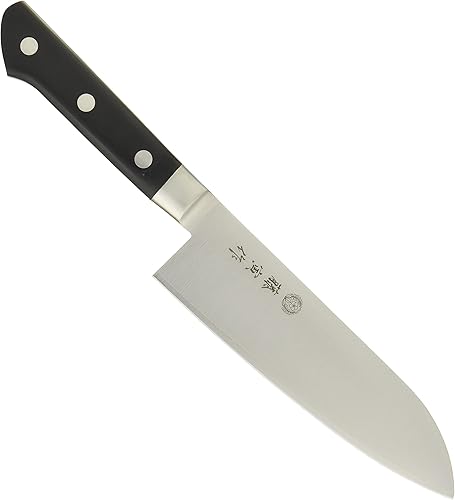
Tojiro F-503 7" Santoku
Tojiro
A great entry-level santoku with VG10 core. Perfect for home cooks wanting Japanese quality.
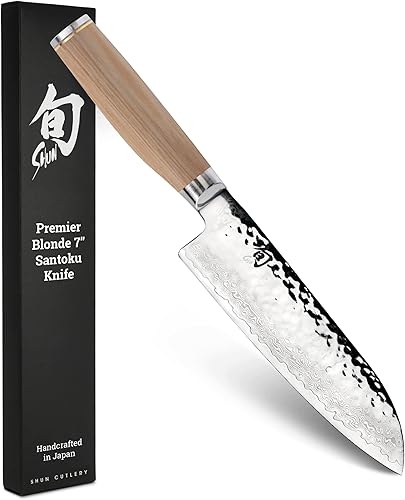
Shun Premier 7" Santoku
Shun
Hand-hammered tsuchime finish, VG-MAX steel at 60-61 HRC, 68-layer Damascus, 16-degree edge. The Premier line's handle works for both right- and left-handed cooks.
Choose Tojiro santoku if you want an affordable vegetable-heavy all-purpose knife. Choose Shun santoku if you want a more finished knife and prefer the premium handle and blade finish. If you are deciding between santoku and gyuto first, read our gyuto vs santoku guide.
Fit, Finish, And Service
This is where Shun earns its premium. The Classic line looks better, feels more polished, and is easier to find from U.S. retailers. Shun also publishes warranty and sharpening-service support through KAI USA, which matters if the knife is a gift or if you do not want to troubleshoot sharpening alone.
Tojiro is more utilitarian. That does not make it cheap in the bad sense. It means the value proposition is concentrated in the blade: VG-10 core, stainless cladding, practical handle, and a proven profile.
Which Brand Should You Buy?
Buy Tojiro if you:
- Want the best value Japanese gyuto
- Are learning Japanese-knife care and sharpening
- Prefer performance over presentation
- Want a first Japanese knife without premium anxiety
- Already own good cutting boards and storage
Buy Shun if you:
- Want a premium first Japanese knife
- Are buying a gift
- Prefer a more refined handle and finish
- Want easier U.S. availability and support
- Like Damascus cladding and a more polished retail experience
Neither knife should be treated like a German beater. Keep a tougher knife around for bones, frozen food, hard squash stems, and jobs that invite twisting.
Care Rules For Both
Tojiro and Shun are stainless Japanese knives, but the edges are still thinner and harder than many Western knives. Use these habits from day one:
- Hand wash and dry immediately.
- Use wood, rubber, or quality synthetic cutting boards.
- Avoid glass, stone, bamboo, and ceramic boards.
- Do not cut bones, frozen foods, hard pits, or dense stems.
- Do not twist the edge out of food.
- Sharpen on whetstones or use a qualified sharpener.
- Store with edge protection.
For maintenance details, use our Japanese knife sharpening guide and best cutting boards for Japanese knives.
Final Verdict
For most value-focused buyers, Tojiro is the better buy. The F-808 gyuto gives you the essential Japanese knife experience: VG-10 core steel, stainless cladding, a thin double-bevel edge, and a familiar handle.
For most premium buyers, Shun is the better upgrade. The Classic 8-inch chef's knife costs more because it gives you a more finished object: VG-MAX steel, Damascus cladding, nicer presentation, and stronger support.
The right answer is not "which brand is objectively better?" It is whether you want the value knife that teaches you Japanese-knife habits or the premium knife that feels complete the moment it lands on the counter.
Sources Checked
- Tojiro Classic F-808 Chef Knife 210mm
- Tojiro Classic F-503 Santoku 170mm
- Shun Classic 8-inch Chef's Knife
- Shun Classic 7-inch Hollow Ground Santoku
Related Guides: Compare premium Japanese brands in our Shun vs Miyabi guide, shop value picks in our Japanese knives under $100 guide, and compare vegetable specialists in our nakiri knife guide.
Marcus Chen
Editor & Lead Reviewer
Marcus Chen is the editor of KitchenwareAuthority.com. He writes about kitchen tools, cookware, and cooking techniques based on hands-on testing and research. Every product recommendation on this site has been evaluated through real-world kitchen use.
Upgrade Your Kitchen Skills
Get chef-tested gear reviews, maintenance tips, and exclusive buying guides delivered to your inbox.
Join 15,000+ home cooks. No spam, ever.