The Best Petty Knives (Japanese Utility Knives) for Precision Prep
Discover the best Japanese petty knives for precision slicing, peeling, and detail work. Reviews of top-rated knives from Tojiro, Shun, and Misono.

Editorial Review
Independent, research-driven reviews by our editorial team

Table of Contents
Affiliate Disclosure: We may earn a commission if you purchase through our links. This doesn't affect our reviews.
Affiliate Disclosure: Kitchenware Authority is an Amazon Associate. We earn from qualifying purchases at no extra cost to you. This helps support our independent research and chef-reviewed guides.
Every home cook learns the value of a solid chef's knife, but there comes a moment during daily prep when a large blade feels clumsy. Whether you are slicing a single shallot, trimming silver skin from a tenderloin, segmenting an orange, or peeling a slippery apple, a full-sized chef's knife can feel like using a broadsword for surgery.
This is where the Japanese petty knife—the ultimate utility blade—becomes indispensable.
Derived from the French word petit (meaning small), the petty knife is the Japanese version of the Western utility knife. However, it far surpasses its Western counterpart in precision. With a thinner blade profile, harder steel, and a significantly sharper edge angle, a quality petty knife allows for incredibly clean cuts that preserve the cellular structure of your ingredients. It acts as the perfect bridge between your primary Japanese chef knife and a standard paring knife.
In this guide, we break down what makes a great petty knife, how it fits into your kitchen, and reviews of the three best models you can buy today.
Best Petty Knives: Quick Picks at a Glance
| Pick | Best For | Steel & Hardness | Blade Profile | Why Buy It |
|---|---|---|---|---|
| Tojiro DP 5.5" Petty | Best Budget / Value | VG-10 Core (60 HRC) | 135mm, Western Handle | Unbeatable performance-to-price ratio; easy maintenance. |
| Shun Classic 6" Petty | Best Premium / Aesthetics | VG-MAX Core (61 HRC) | 150mm, D-Shape PakkaWood | Stunning Damascus finish, superb edge retention, premium feel. |
| Misono Molybdenum 6" Petty | Professional Workhorse | Molybdenum Steel (58 HRC) | 150mm, Western Full-Tang | Incredible balance, extremely durable, easy to sharpen on whetstones. |
What Is a Petty Knife and Why Do You Need One?
A petty knife is a small, double-bevel utility knife that typically ranges from 120mm to 180mm in blade length. Unlike the wider gyuto vs santoku options that dominate the cutting board, a petty knife is narrow, lightweight, and agile.
Its slender design makes it uniquely suited for two distinct styles of preparation:
- In-Hand Work: Peeling fruit, coring tomatoes or strawberries, and shaping garnishes.
- On-the-Board Work: Slicing small aromatics (shallots, garlic, ginger), slicing cheeses, trimming fat and silverskin from proteins, and segmenting citrus fruits.
Because the blade is relatively short and narrow, you won't get the same knuckle clearance that a taller knife provides. You cannot comfortably use it to rock-chop large bunches of herbs or split winter squash. But for tasks where you need the blade to follow tight curves or make delicate, horizontal draw-cuts, a petty knife operates with scalpel-like control. It's the knife you'll find yourself grabbing for 60% of those quick, mid-day prep tasks when you don't want to wash a heavy chef's knife.
Petty Knife vs. Paring Knife vs. Chef's Knife
It's common to confuse the utility of a petty knife with a standard paring knife. However, there are structural differences that affect how you cook.
- Paring Knives (80mm - 100mm / 3" - 4"): Designed almost exclusively for in-hand work. Their short blades make them excellent for peeling and coring, but they are too short and lack the geometry for comfortable use on a cutting board.
- Petty Knives (120mm - 180mm / 4.7" - 7"): Offer enough blade length to transition smoothly to the cutting board for small prep items. A 150mm petty, for instance, has enough flat edge to slice garlic without your fingers hitting the board, yet is still light enough to peel an apple in the air.
- Chef's Knives / Gyutos (210mm - 240mm / 8" - 9.5"): The primary kitchen workhorses. They handle heavy chopping, large vegetables, and volume prep, but lack the agility for delicate coring or small, intricate slicing tasks.
If you already own a main chef's knife, adding a petty knife is a far better investment than buying a paring knife. The extra length makes the petty exponentially more versatile.
The 3 Best Petty Knives: Detailed Reviews
We evaluated the top petty knives on the market, focusing on edge retention, steel quality, balance, handle comfort, and value. These three choices represent the absolute best options for different budgets and preferences.
1. Best Value: Tojiro DP 5.5" Petty (135mm)
For cooks looking to experience authentic Japanese steel without a premium price tag, the Tojiro DP Petty is the undisputed champion. Tojiro is famous for delivering professional-grade performance at an approachable price, making it a staple in both home kitchens and professional lines.
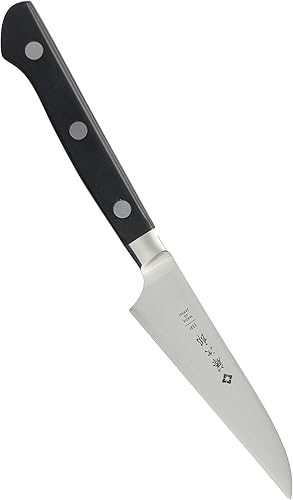
Tojiro DP 5.5" Petty
Tojiro
An excellent entry-level petty knife with VG10 core. Great for peeling and small prep tasks.
Tojiro DP 5.5" Petty
The Tojiro DP Petty features a VG-10 super steel core clad in two layers of softer stainless steel. This 3-ply construction gives you the benefits of VG-10's legendary sharpness and edge retention (around 60 HRC) while protecting the blade from corrosion and chipping. It is fitted with a durable, full-tang Western-style Pakkawood handle that provides a familiar weight and balance for Western cooks.
In kitchen testing, the 135mm blade length proved to be an excellent sweet spot. It is short enough to feel nimble when coring tomatoes, yet long enough to slice clean strips of chicken breast. If you are looking to build a budget-friendly collection, pairing this petty with other budget Japanese knives under $100 is an incredibly smart setup.
- Pros: Outstanding VG-10 core steel, highly corrosion-resistant clad design, familiar and durable Western handle.
- Cons: Simple, utilitarian finish; handle may feel slightly small for cooks with large hands.
2. Best Premium: Shun Classic 6" Petty (150mm)
If you value stunning design, exceptional fit and finish, and premium materials, the Shun Classic Petty is a beautiful addition to any kitchen. Shun's Classic line is the gold standard for premium mass-production Japanese cutlery, and this petty knife shows why.
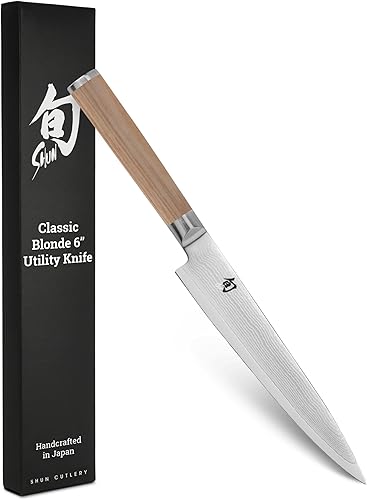
Shun Classic 6" Petty
Shun
A beautiful petty knife with Shun's classic Damascus pattern. Perfect for detail work and small tasks.
Shun Classic 6" Petty
The Shun Classic Petty is forged from proprietary VG-MAX steel, hardened to 61 HRC. The core is clad with 34 layers of Damascus steel on each side (68 layers total), creating a striking, wave-like pattern that helps reduce food drag. The handle is made of ebony PakkaWood and features Shun's signature D-shape profile, which nests naturally into the palm of right-handed cooks (though left-handed cooks can still use it comfortably).
Our testing highlighted the incredible precision of this blade. It glides through delicate tomato skins and citrus membranes with zero resistance. The 150mm length provides a bit more flat edge for board work, making it highly effective for mincing small herbs and garlic cloves. For a deeper look at premium brands, read our comprehensive Shun vs Miyabi comparison.
- Pros: Gorgeous Damascus cladding, premium VG-MAX steel core, excellent balance, comfortable D-shaped handle.
- Cons: Higher price point; Damascus finish requires careful cleaning to avoid scratching.
3. Best Professional Workhorse: Misono Molybdenum 6" Petty (150mm)
Misono is one of the most respected brands in the professional culinary world. Operating out of Seki, Japan, Misono focuses entirely on balance, geometry, and durability over aesthetic flair. The Molybdenum Petty is their professional workhorse, built to withstand hours of daily prep.
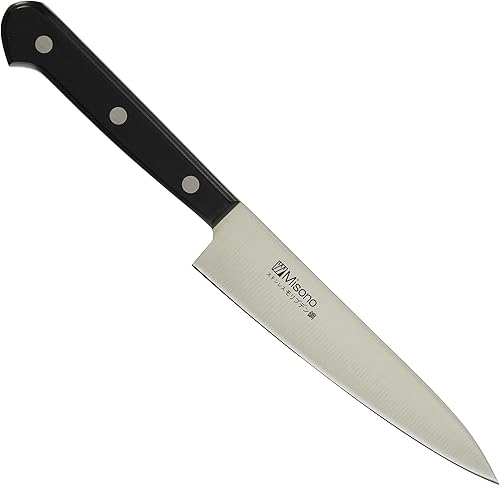
Misono Molybdenum 6" Petty
Misono
A high-quality utility knife perfect for detail work. Misono's molybdenum steel offers great edge retention.
Misono Molybdenum 6" Petty
Unlike Tojiro and Shun, Misono uses a monosteel construction made of high-quality Molybdenum Vanadium stainless steel. It is hardened to around 58 HRC, which is slightly softer than VG-10. This is a deliberate design choice: the slightly lower hardness makes the steel tougher, meaning it is less prone to micro-chipping if it hits a stray bone or hard seed, and it is exceptionally easy to restore to razor sharpness on a whetstone.
The knife is incredibly thin, light, and features an ergonomic Western handle that is curved to reduce hand fatigue. Line cooks favor this petty for station work because it is highly responsive and holds up to demanding environments.
- Pros: Professional-grade ergonomics, highly durable monosteel construction, very easy to sharpen, extremely thin blade geometry.
- Cons: Plain, non-cladded appearance; requires more frequent steeling or touch-ups than VG-10.
How to Choose the Right Petty Knife for Your Kitchen
When shopping for the best petty knife, keep these three key specifications in mind to ensure you get a blade that matches your cooking style.
Blade Length: 120mm vs. 150mm vs. 180mm
- 120mm (4.7 inches): Best if you intend to use the knife primarily in the air (peeling, coring, trimming). It feels like an agile, slightly oversized paring knife.
- 150mm (6.0 inches): The absolute sweet spot for most home cooks. It offers enough length to comfortably slice medium-sized items on the cutting board while remaining short enough for in-hand prep.
- 180mm (7.0 inches): Borderline chef's knife territory. Excellent for slicing cooked meats and large detail prep, but too long to comfortably use for in-hand peeling.
Western vs. Japanese Wa-Handles
- Western Handles (Yo-handle): Found on the Tojiro DP and Misono Molybdenum. These handles are riveted, heavier, and provide a familiar feel with a balance point closer to the handle. They are highly durable and easy for beginners to use.
- Japanese Handles (Wa-handle): Traditional wood handles (usually octagonal, round, or D-shaped). They are much lighter, shifting the balance point of the knife forward toward the blade. This creates a nimble, lightweight feel that many precision-focused cooks prefer. If you are interested in traditional K-tip precision, you might also want to explore our bunka knife guide for larger precision blades.
Steel Hardness and Maintenance
If you want a knife that stays sharp for months without touching a stone, choose hard steels like VG-10 or VG-MAX (60+ HRC), but remember they are more brittle. If you want a tough knife that won't chip and can be easily sharpened, choose Molybdenum or carbon steel, but expect to hone or sharpen it more frequently.
Care and Maintenance: Keeping Your Petty Sharp
A Japanese petty knife is thin and delicate. To protect your investment and maintain its edge:
- Hand Wash Only: Never put a Japanese knife in the dishwasher. The heat, harsh detergents, and movement will chip the edge and warp the handle. Wash with warm, soapy water and dry immediately with a clean towel.
- Use Proper Cutting Boards: Avoid cutting on glass, marble, bamboo, or granite, as these hard surfaces will immediately dull or chip the thin edge. Stick to end-grain wood or soft rubber/plastic boards.
- Proper Storage: Store your petty on a magnetic knife strip or in a protective sheath. Letting it rattle around loose in a utensil drawer is a recipe for a chipped blade.
- Equip Your Station: For optimal performance, check out our guide on essential knife accessories to learn about magnetic strips, edge guards, and honing rods.
Summary: Which Petty Knife Should You Buy?
Adding a petty knife to your culinary toolkit will change how you approach prep work. For the best value, the Tojiro DP 5.5" Petty is an unbeatable entry point. If you want a premium showpiece with Damascus aesthetics, the Shun Classic 6" Petty is worth every penny. For professional reliability and easy maintenance, the Misono Molybdenum 6" Petty is the choice of culinary professionals worldwide.
Pairs these support blades with a high-quality chef's knife, and you will have the perfect two-knife setup to tackle any culinary challenge.
Nora Whitfield
Writer, Kitchenware Authority
Nora Whitfield writes Kitchenware Authority's reviews and buying guides. Every knife, pan, and appliance is vetted against maker specifications, materials and safety documentation, and the long-run experience verified home cooks report — not first-hand lab tests.
Upgrade Your Kitchen Skills
Get chef-curated gear reviews, maintenance tips, and exclusive buying guides delivered to your inbox.
Join 15,000+ home cooks. No spam, ever.