All-Clad Rice Cooker Review & Stovetop Cooking Guide
Review of the discontinued All-Clad rice cooker, top induction alternatives (Zojirushi, Cuckoo), and step-by-step stovetop rice cooking in stainless steel.

Chef Tested
Hands-on tested by professional chefs
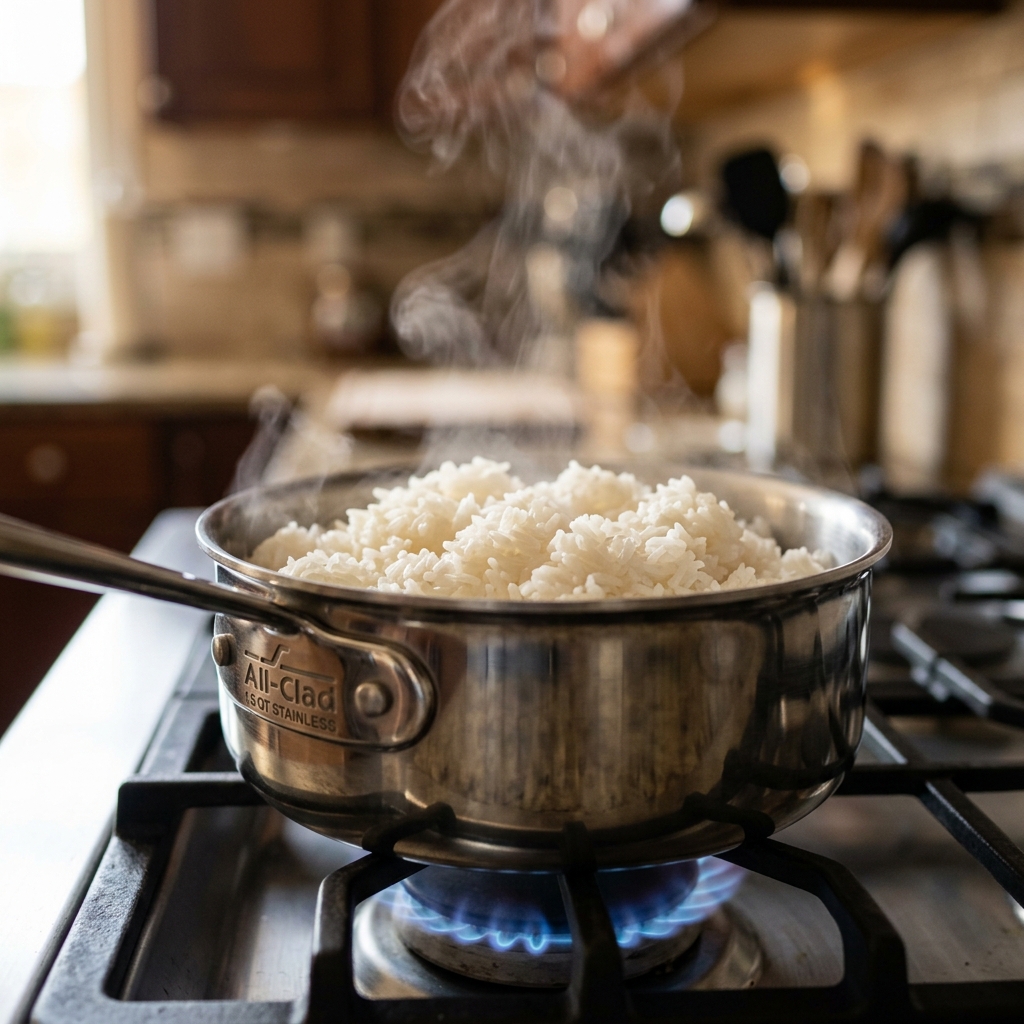
Table of Contents
Affiliate Disclosure: We may earn a commission if you purchase through our links. This doesn't affect our reviews.
If you are searching for an all clad rice cooker review today, you are likely to run into a frustrating discovery: All-Clad's electric rice and grain cooker (model RK811D51) has been discontinued.
While shoppers searching for an all clad rice cooker review 2025 or all clad rice cooker review 2026 might hope to find a newly launched version of this stainless steel countertop appliance, All-Clad has shifted its focus back to premium stove-to-oven cookware.
However, you don't need a discontinued plug-in appliance to cook flawless, restaurant-quality rice with All-Clad. You can either invest in a top-tier Japanese or Korean induction rice cooker that outperforms the original All-Clad appliance, or you can use your existing All-Clad stainless steel saucepans on the stovetop.
In this guide, we will provide a complete all clad rice cooker review of the discontinued electric model, recommend the best modern countertop alternatives, and detail a step-by-step stovetop rice cooking technique that guarantees your rice won't stick to your stainless steel pans.
The Discontinued All-Clad Rice Cooker: A Retro Review
The All-Clad Rice and Grain Multi-Cooker (RK811D51) was a unique entry in the small appliance market. Styled to match All-Clad's iconic D3 and D5 stainless steel cookware collections, it featured a brushed stainless steel exterior and a heavy, ceramic-coated aluminum insert.
Specs & Features of the RK811D51:
- Capacity: 4 Quarts (approximately 8-10 cups of cooked rice)
- Control Panel: Digital LCD display with delayed start (up to 15 hours) and automatic keep-warm
- Cooking Programs: White Rice, Sushi Rice, Brown Rice, Risotto, Grains, Slow Cook, Steam, and Brown/Saute
- Accessories: Stainless steel steaming basket, measuring cup, and rice spatula
Pros
- Cookware Aesthetics: Unlike most plastic rice cookers, the All-Clad looked beautiful on premium countertops.
- Versatility: The Brown/Saute mode allowed users to toast grains or sear aromatics directly in the pot before cooking, a feature missing from most Japanese rice cookers.
- Durable Build: The outer housing and steamer insert felt incredibly solid and built to last.
Cons
- Discontinued Status: It is no longer manufactured, making replacement parts (like the nonstick inner pot) difficult to source.
- Basic Programming: While it had digital presets, it lacked the sophisticated "fuzzy logic" microprocessors that automatically adjust heat and cook times based on moisture levels.
- Premium Price Tag: When available, it was priced in the same bracket as advanced induction cookers but delivered less precise rice textures.
Best Countertop Alternatives: Japanese & Korean Induction
If you want a dedicated countertop appliance that matches or exceeds the performance of a premium rice cooker, you should look to Japanese and Korean manufacturers. These brands utilize Induction Heating (IH), which heats the entire inner pot rather than relying on a single heating plate at the bottom. This produces perfectly even heat distribution, very similar to All-Clad's tri-ply cookware.
1. Zojirushi NP-HCC10XH Induction Heating Rice Cooker (The Gold Standard)
If you want the ultimate precision, Zojirushi's induction heating model is the gold standard. It uses a microcomputer to adjust cooking times and temperatures down to the second.
- Technology: Induction Heating (IH) + Multi-Menu Fuzzy Logic
- Best For: Purists who want perfect brown rice, jasmine, sushi, or steel-cut oats.
- Build: Sleek clear-coated stainless steel exterior that fits modern kitchens.
Zojirushi NP-HCC10XH Induction Rice Cooker
2. Cuckoo CRP-LHTR1009F Induction Heating Pressure Rice Cooker (The Speed & Tech Choice)
Korean-made Cuckoo cookers combine induction heating with high pressure. High-pressure cooking gelatinizes the rice starches more deeply, resulting in fluffier, glossier, and faster rice.
- Technology: Twin Pressure (Ultra-High Pressure or Non-Pressure) + Induction Heating
- Best For: Fast cooking speeds and premium, high-tech kitchen designs.
- Build: Stunning minimalist matte finish with a full stainless steel inner pot.
Cuckoo CRP-LHTR1009F Twin Pressure Cooker
How to Cook Perfect Stovetop Rice in All-Clad Stainless Steel (Without Sticking!)
The most common complaint about cooking rice in stainless steel cookware is that the rice sticks, burns, and leaves a stubborn, starchy crust at the bottom of the pan. Because stainless steel has microscopic pores, starch and proteins can easily bond to the metal when heated.
However, with the correct technique, your All-Clad D3 or D5 saucepan can cook stovetop rice that releases cleanly every single time. Here is the step-by-step chef method.
The Ingredients & Ratios
- Rice: 1 cup of long-grain white rice (Jasmine or Basmati work best)
- Liquid: 1 ¼ cups of cold water (for Jasmine) or 1 ½ cups (for Basmati/standard long-grain)
- Fat (Crucial for Non-Sticking): 1 teaspoon of butter, olive oil, or neutral cooking oil
- Seasoning: ½ teaspoon of kosher salt
Step-by-Step Technique
Step 1: Rinse the Rice (Do Not Skip This!)
Put your rice in a fine-mesh strainer and rinse it under cold running water for 1 to 2 minutes, agitating the grains with your fingers. You will see the water running cloudy at first—this is excess surface starch. Keep rinsing until the water runs completely clear. Rinsing removes the loose starch that creates a sticky, glue-like paste in the pan.
Step 2: Toast the Grains (The Pilaf Method Trick)
Place your empty All-Clad saucepan over medium heat for about 2 minutes. Add your teaspoon of butter or oil. Once melted or hot, add the rinsed (and well-drained) rice to the pan.
Saute the dry rice grains in the oil for 1 to 2 minutes, stirring constantly. You will hear a crackling sound, and the tips of the grains will turn translucent or chalky white. Toasting coats each individual grain of rice in fat, which acts as a barrier to prevent the starch from bonding to the pan's microscopic pores.
Step 3: Add Liquid and Boil
Pour in your cold water and add the salt. Stir once to distribute the grains, making sure no rice is stuck to the sides of the pan above the water line. Bring the liquid to a rolling boil over medium-high heat.
Step 4: Cover and Drop the Heat to Low
As soon as the water reaches a full boil, cover the pan with a tight-fitting lid and immediately lower the heat to the absolute lowest setting on your stove.
Step 5: Do Not Peek! (Cook for 15 Minutes)
Cook the white rice undisturbed on low heat for exactly 15 minutes (or 40 minutes for brown rice). Do not open the lid, lift the pan, or stir the rice. Opening the lid releases the steam pressure and drops the temperature inside the pan, which halts the cooking process and increases the likelihood of the rice burning or sticking to the bottom.
Step 6: The Rest Phase (The Magic Step)
After 15 minutes, remove the saucepan completely from the heat source. Keep the lid closed. Let the pan sit undisturbed off the heat for 10 to 15 minutes.
During this rest phase, the residual heat and trapped steam redistribute evenly throughout the pan. This moist steam naturally loosens any starches that may have lightly adhered to the bottom of the pan, releasing the grains.
Step 7: Fluff and Serve
Remove the lid and gently fluff the rice with a fork or silicone spatula. The rice should be light, fluffy, and separate, leaving the bottom of your All-Clad saucepan clean and free of burnt or stuck-on grains.
Comparing Your Rice Cooking Options
| Method | Best For | Cooking Time | Clean-Up | Price / Value |
|---|---|---|---|---|
| All-Clad Stovetop (D3/D5 Pan) | Traditionalists, minimalists, and zero-clutter kitchens | 30 mins (incl. rest) | Easy (if rested) | Free (uses existing cookware) |
| Zojirushi Induction (NP-HCC10XH) | Gourmet rice texture & hands-off automation | 50 mins | Very Easy | High investment, excellent long-term value |
| Cuckoo Induction (CRP-LHTR1009F) | Speed, pressure cooking, and high-tech styling | 20-35 mins | Very Easy | Premium price, top-tier performance |
| Discontinued All-Clad RK811D51 | Collectors of All-Clad electric appliances | 40 mins | Moderate | Used market only, hard to justify |
Pro-Tips for Care and Cleanup
If you do end up with stuck-on rice in your All-Clad pan (which can happen if your stove's lowest setting is still too hot), do not scrub it with steel wool or abrasive cleaners, which will scratch the steel.
- The Soak: Fill the pan with warm water and a squeeze of dish soap, and let it sit for 30 minutes. The starch will soften and wipe away easily.
- Baking Soda simmer: For stubborn burnt spots, fill the pan with an inch of water, add 2 tablespoons of baking soda, and bring to a simmer for 5 minutes. Use a wooden spoon to gently scrape the spots as they heat.
- Bar Keepers Friend: To restore the original polished shine of your All-Clad pan and remove any white mineral or starch scaling, wash it with a small amount of Bar Keepers Friend powder and a non-scratch sponge.
Frequently Asked Questions
Why did All-Clad discontinue their electric rice cooker?
All-Clad specializes primarily in high-end bonded metal cookware made in their Canonsburg, Pennsylvania factory. While their small electric appliances (like slow cookers, waffle makers, and rice cookers) were popular, manufacturing them overseas was less aligned with their core tri-ply cookware business.
Can you cook brown rice in a stovetop All-Clad saucepan without sticking?
Yes. Follow the exact same pilaf method (rinse, toast in oil, and boil), but use a ratio of 1 cup brown rice to 2 cups water. Increase the simmer time to 40-45 minutes on low, followed by the crucial 15-minute rest off the heat.
Does the lid quality matter for stovetop rice?
Absolutely. A tight-fitting lid is essential for trapping steam during the simmer and rest phases. All-Clad saucepans include heavy, snug stainless steel lids that are ideal for this task. If your lid is loose, place a clean kitchen towel or foil over the top of the pan before pressing the lid down to create a better seal (ensuring the towel is folded safely away from any open flame).
Is induction heating better than standard electric heating for rice?
Yes, induction heating is superior. Standard electric rice cookers heat only from a plate at the bottom, which can lead to uneven cooking or crusting at the bottom of the pot. Induction heating turns the entire inner pot into the heating element, surrounding the rice with uniform, three-dimensional heat.
Marcus Chen
Editor & Lead Reviewer
Marcus Chen is the editor of KitchenwareAuthority.com. He writes about kitchen tools, cookware, and cooking techniques based on hands-on testing and research. Every product recommendation on this site has been evaluated through real-world kitchen use.
Upgrade Your Kitchen Skills
Get chef-tested gear reviews, maintenance tips, and exclusive buying guides delivered to your inbox.
Join 15,000+ home cooks. No spam, ever.